
Artificial Intelligence and HR: Choosing the Right Tool
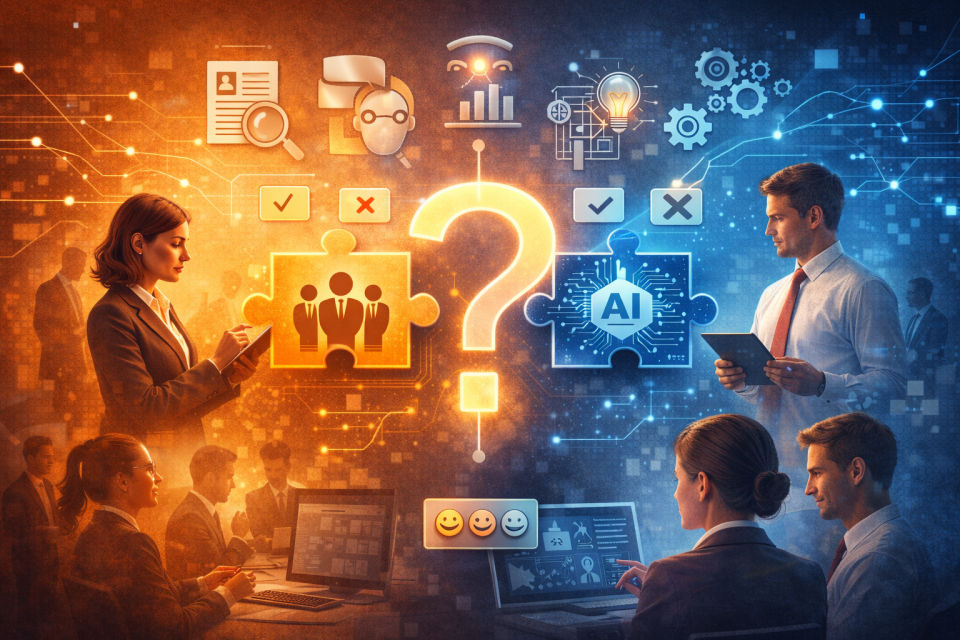
Today, Human Resources departments have access to a wide range of technological solutions. While these diverse options open new doors, distinguishing the most appropriate and necessary one for a company is becoming increasingly difficult. The key to a successful technological transformation in HR is not simply choosing the most advanced tool. It is essential to find a solution that aligns with the company’s culture, leadership model, organizational structure, and growth targets, while addressing real needs. The first step in this process is analyzing HR workflows. Which process do we want to improve? In which areas do we experience loss of momentum, errors, or disconnection? Which tasks are most exhausting for employees or reduce productivity due to constant repetition? Without clear answers to these questions, no technology can deliver real value to business operations.
Choosing the right tool is a matter of matching needs. For example, while systems that scan CVs and match candidates increase speed in recruitment; digital guides and Q&A bots offered to new hires facilitate the onboarding process. When it comes to performance and engagement management, tools that collect real-time feedback and perform trend analysis become meaningful. Similarly, recommendation engines that offer personalized roadmaps for learning and development, and self-service chatbots that answer routine questions in employee support processes, make a significant difference. As seen, not every AI tool is a solution for every problem. Therefore, the main issue is not just possessing a tool, but correctly determining which operational problem that tool will solve and in which function.
Regardless of how technically powerful a chosen solution is, the ultimate success of the system is determined by the approach of the people who will use it. Technology creates value not when it is implemented solely by a management decision, but when it truly simplifies an employee’s work and is embraced by them. For this reason, gathering employee feedback during the selection phase, listening to their expectations, and testing the process with pilot applications are critical steps. Complex structures that take a long time to learn will eventually fall out of use, no matter how advanced they are. An ideal HR tool should be simple, fast, and intuitive enough to be used without requiring technical expertise. Solutions that create new obstacles with their complex structures, rather than lightening the routine workload of the employee, generally encounter resistance and fail to garner the expected interest.
For this transformation to be permanent, it is also important that the process is designed as a holistic structure rather than a fragmented one. Managing processes such as recruitment, performance, and development in disconnected systems hinders efficiency and compromises data integrity. To get full efficiency from artificial intelligence, an integrated structure must be built where all these processes communicate with each other and data is managed from a common center.
In summary, choosing AI in Human Resources is more than a technical decision; it is a choice of organizational culture and employee experience. The main goal is to reduce the routine workload on humans, creating space for them in more creative, strategic, and human-centric areas. Technology reaches its true success when it facilitates daily operations and moves HR from being an operational unit to a strategic powerhouse.